Modern Treatments with Interventional Radiology: Current Approaches from Prof. Dr. Aykut Recep Aktaş
Dear readers, as the world of medicine continues to evolve rapidly, the approaches we offer in the diagnosis and treatment of diseases are undergoing a fundamental transformation. As an Interventional Radiology specialist, I am part of this transformation, allowing us to provide our patients with far more comfortable, faster, and more effective treatment options through minimally invasive methods. These modern treatment approaches, emerging as an alternative to traditional open surgery, stand out for their potential to enhance patients' quality of life and shorten recovery times.
Interventional Radiology: The Home of Precision and Efficacy
Interventional Radiology is a medical speciality focused on treating various diseases through small incisions or natural body orifices, guided by medical imaging (ultrasound, computed tomography, fluoroscopy, magnetic resonance). This means we utilise fine needles, catheters, and wires instead of surgical scalpels to access the target area within the body. Our core principle is to treat the disease with a targeted approach while preserving organ functionality.
This modern treatment approach is extensively used across a wide spectrum of conditions, including tumour ablations (for liver, kidney, lung, and bone tumours), vascular occlusions and aneurysms, uterine fibroids (myomas), varicose veins, benign prostatic enlargement, bile duct obstructions, and the cessation of bleeding. Our continuous development of new indications and techniques clearly demonstrates the dynamism within this field.
Among the significant advantages of interventional radiological procedures are that they are typically performed under local anaesthesia or sedation rather than general anaesthesia, result in smaller scars, lead to shorter hospital stays, carry a lower risk of infection, and ensure a much faster recovery process. Patients can often return to their normal lives on the same day or the day after the procedure.
The Treatment Process: A Detailed Overview
An interventional radiological treatment process begins with a detailed preliminary consultation and a comprehensive assessment with the patient. Firstly, the patient's medical history is reviewed, existing imaging tests are evaluated, and a physical examination is conducted. Subsequently, the details of the procedure to be performed, its potential risks, and expected benefits are explained thoroughly to the patient and their relatives. The patient then provides their consent after being fully informed about the procedure.
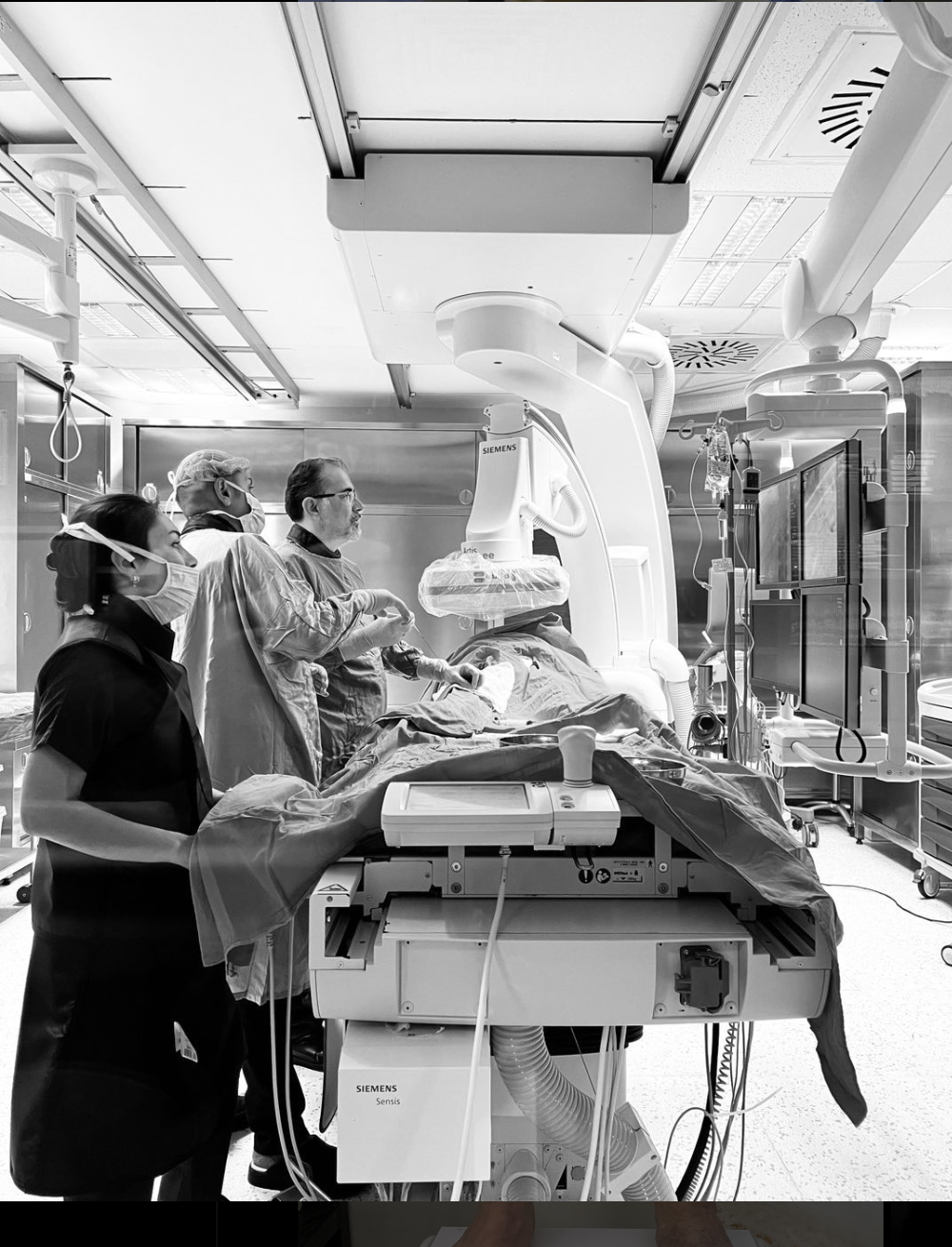
The procedure is typically carried out in a sterile environment within a specially equipped angiography suite. After the area to be treated is numbed with local anaesthesia, a millimetric incision or needle entry is made in the skin. Guided by radiological imaging (such as fluoroscopy, ultrasound, or CT), fine catheters, wires, or needles are advanced within the body to reach the disease site. Real-time imaging ensures that all manoeuvres are performed with great precision and under control.
Following the procedure, the patient is taken to a dedicated room for a brief observation period. During this time, vital signs are monitored, pain control is managed, and precautions are taken against potential complications. Due to its minimally invasive nature, patients generally experience a rapid recovery process and are discharged quickly. Post-discharge follow-up appointments monitor the patient's healing process, and additional treatments are planned if necessary.
Future Approaches and Our Expertise
Interventional Radiology is a dynamic field that continues to revolutionise medicine with constantly evolving technology. I believe that with innovative devices, more precise imaging methods, and AI-supported applications, we will be able to tackle much more complex cases in the future. Our aim is to enhance our patients' quality of life by offering the safest, most effective, and most comfortable modern treatment options. For all our minimally invasive treatment options in Interventional Radiology, please visit the Prof. Dr. Aykut Recep Aktaş website.